

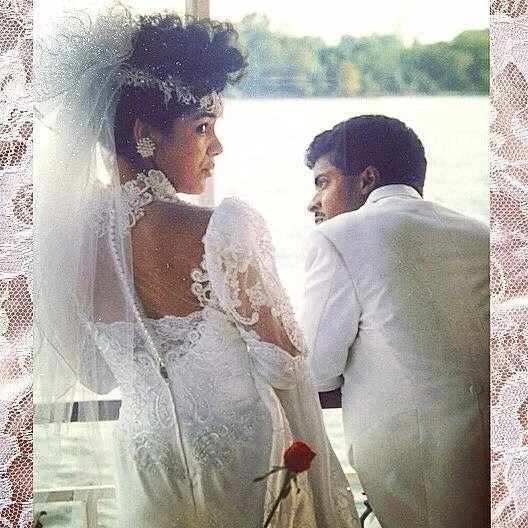
My family documentary would open with this photo of my parents, taken at their wedding reception on August 28th, 1988! My dad was 25, and my mom was 23…such babies! Such cutie pies! Then I would transition into childhood photos of the two of them…*writes this down*…
The idea of creating a family documentary can be exciting and perhaps a little intimidating, especially if your parents aren't used to being in front of a camera. You may be looking forward to hearing stories about their childhood, learning more about your family's history, or giving future generations a glimpse into the lives of the people who came before them…but you might also be wondering how to introduce the idea as well as how to help them feel comfortable sharing their stories. I have some good news: prepping your parents for a family documentary doesn't require them to memorize answers, practice speeches, or become someone they're not. It simply starts with a conversation.
Begin with the why. Before discussing filming dates or interview questions, explain why you want to create this documentary in the first place. Perhaps you want to understand your parents' lives before they became parents, preserve family traditions, learn about your grandparents, or give your children a deeper connection to their roots. Sharing your motivation helps your parents understand that this isn't about putting them on the spot or asking them to perform - it’s about honoring their experiences and making space for stories that might otherwise go untold. When they understand what this means to you, they may feel more connected to the process.
Let them know they don't need to have all the answers. One of the biggest concerns people have about being interviewed is not knowing what to say. Your parents might worry that they'll forget important details, stumble over their words, or struggle to remember dates and names. Reassure them that this is completely okay! A family documentary isn't a test, and there are no perfect answers. Sometimes the most meaningful stories emerge from a pause, a laugh, a surprising detail, or one memory that leads to another. The goal is not to create a flawless performance - it's to make room for genuine conversation.
Give them an idea of what to expect. If your parents have never participated in an interview like this, walking them through the process can help ease their nerves. Explain where filming will take place, who will be present, how the conversation will flow, and approximately how much time you expect to spend together. Let them know that they can ask for a break or take a moment to collect their thoughts at any time. If there are topics they'd prefer not to discuss, those boundaries can be communicated ahead of time. The more comfortable they feel with the process, the easier it may be to settle into the experience.
Invite them to think about their lives, without asking them to prepare a script. You might encourage your parents to reflect on their childhood homes, favorite family traditions, friendships, first jobs, significant relationships, or lessons they've learned over the years. You could ask them to think about the people who influenced them most or the memories they hope their children and grandchildren will carry forward. There's no need to send them a long list of questions and expect rehearsed responses. A few gentle prompts can simply help memories begin to surface, leaving plenty of room for unexpected stories to unfold during filming.
Make room for emotions. Family history isn't always simple, and conversations about the past can bring up joy, pride, grief, complicated relationships, or memories your parents haven't revisited in years. Let them know they are not expected to share anything they're uncomfortable discussing. A meaningful documentary doesn't require every detail of someone's life to be revealed, and honoring their story also means respecting their privacy and boundaries. Some moments may bring laughter, others may bring tears. Both are okay. The most important thing is that your parents feel respected, heard, and able to participate in a way that feels right for them.
You don't need to transform your home into a studio, plan an elaborate family gathering, or make every moment picture perfect. Depending on the documentary, filming might take place around the kitchen table, in a childhood home, during a favorite family activity, or in another setting that feels meaningful. Your parents can wear something comfortable, bring along a treasured photograph or keepsake if they'd like, and simply show up as themselves. You don't need a milestone birthday or a special occasion to make this worthwhile. Your family, your relationships, and the stories you share are reason enough. Family documentaries offer a beautiful opportunity to honor the people and experiences that shape us. With thoughtful preparation and a little openness, you can create space for conversations that your family will be grateful to have recorded. Your story matters, and I’d be honored to help you tell it.